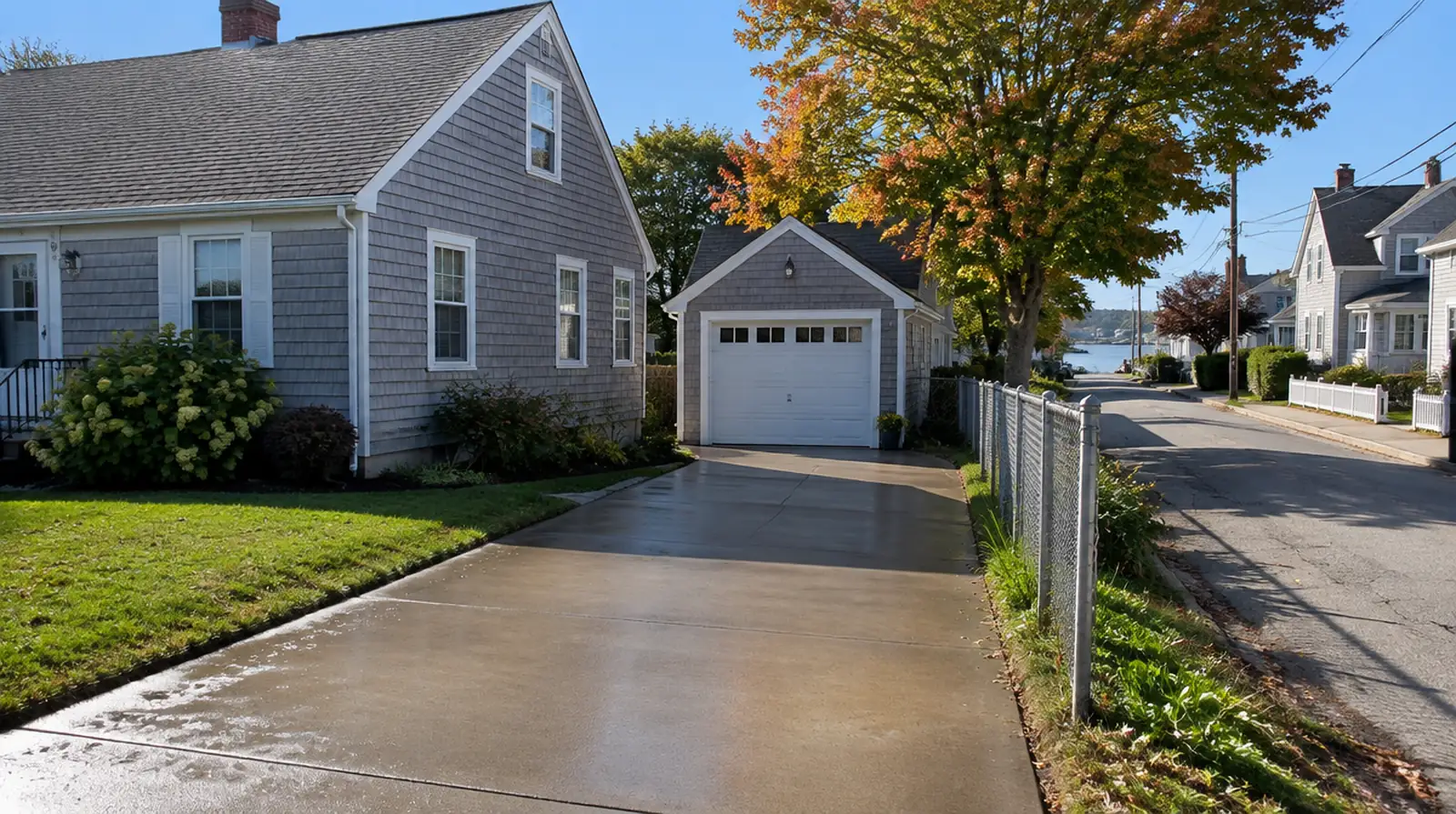
What winter does to East Providence concrete
East Providence sits on the east shore of the Seekonk and Providence rivers, at the head of Narragansett Bay. Neighborhoods like Riverside, Rumford and Watchemoket are full of older homes: triple-deckers, capes, bungalows and postwar ranches, many with concrete driveways, front steps and walks that have been through decades of winters.
Coastal Rhode Island does not stay frozen all winter. It freezes and thaws over and over, sometimes in the same day. Each time, water that has soaked into concrete expands as ice and breaks off a little of the surface. Road salt makes it worse by drawing in more water and adding chemical stress. Add salt air near the water and nor'easters that pile up slush, and unsealed concrete can start scaling in just a few seasons.
How sealing protects concrete
A sealer keeps water and dissolved salt from getting into the pores of the concrete. Less water inside means less freeze damage and less salt scaling. Sealers also help with oil drips, leaf stains and mildew on shaded steps.
Sealing is preventive. It will not repair concrete that is already crumbling, cracked through or sunken. Those slabs need repair or replacement first, and we will tell you honestly if sealing is not worth the money.
Choosing a sealer
Penetrating silane and siloxane sealers. Our usual pick for driveways, walks and steps here. They soak in, repel water and salt, and do not change the look or make the surface slippery. They also hold up well to snow shovels and plows.
Acrylic sealers. These leave a film and enhance color, which makes them a good fit for stamped concrete patios and colored surfaces. They wear faster under shovels and tires and need more frequent recoats.
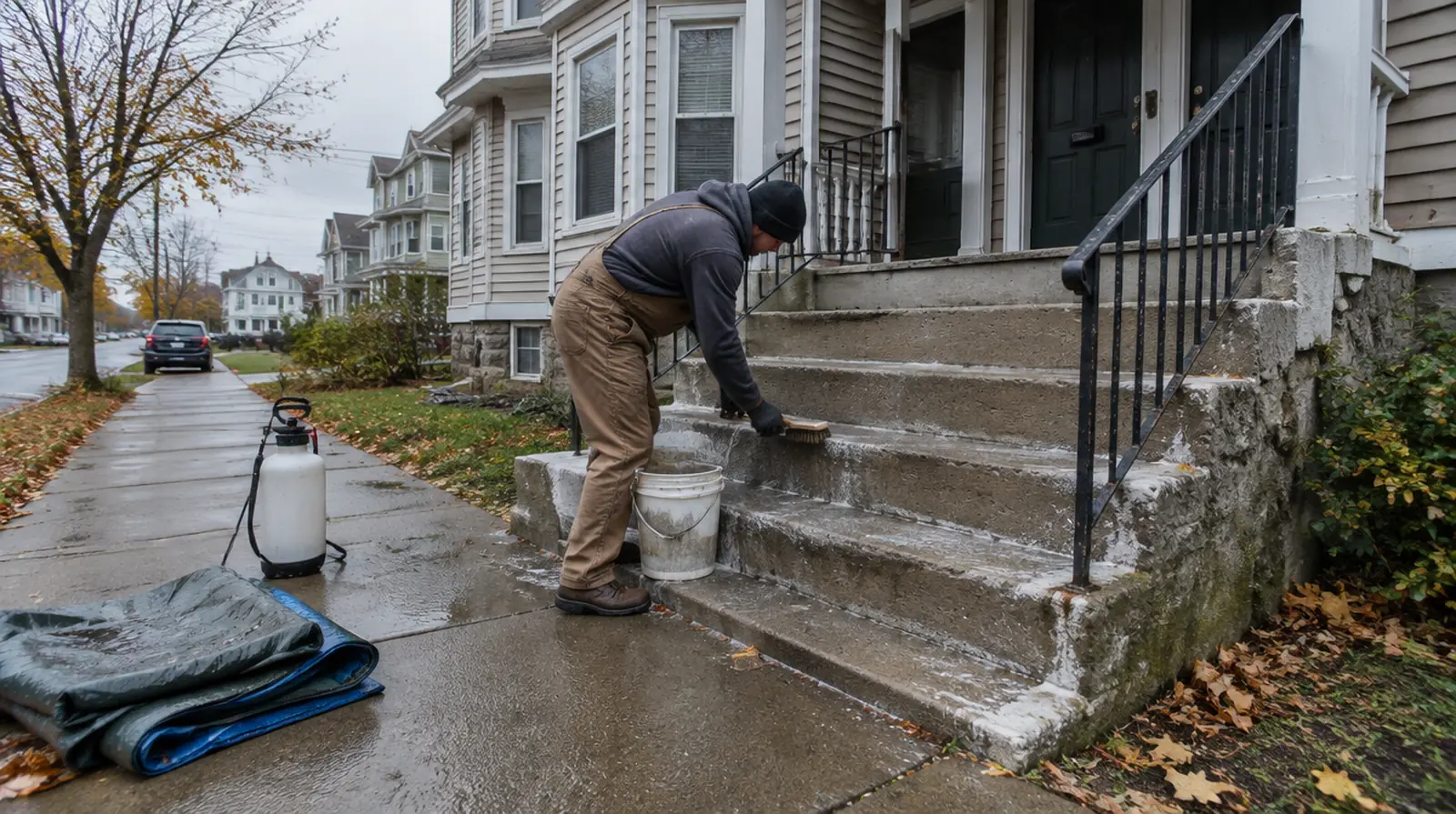
Our sealing process
- Inspection. We look for scaling, cracks, spalled edges and any old sealer.
- Repairs. Cracks and small spalls are filled first. Badly scaled steps may need resurfacing.
- Cleaning. We pressure wash away dirt, salt residue, mildew and leaves. Oil stains get a degreaser.
- Drying. Concrete has to dry before sealing, usually at least a day after washing.
- Application. We apply the sealer evenly with a sprayer and roller, paying attention to edges, joints and step noses where water collects.
When to seal
Most sealers need dry concrete and temperatures above about 50 degrees for several hours after application. Here, that means late spring through early fall. Late August through October is a popular time, because it protects the concrete right before salt season starts. New concrete should cure for about a month before sealing, so if you are pouring a new driveway in fall, we may suggest sealing the following spring.
Steps, walks and driveways
Front steps are usually the first concrete to fail on older homes. They get salted all winter, shoveled hard and splashed from gutters. Sealing them every couple of years can add a lot of life. Walks and driveways come next, especially where cars carry slush and salt in from the street. If your steps or walks are already too far gone, see our concrete steps and concrete walkways pages.
Garage floors and basement entries
Salt does not stay outside. Cars drip salty slush onto garage floors all winter, and many older East Providence homes have an outside basement entry or bulkhead with concrete steps that stay damp. We can seal garage slabs with a penetrating product that resists salt and oil, and treat bulkhead steps and landings so they shed water instead of soaking it up. It is an easy add-on when we are already sealing the driveway.
Winter care after sealing
Use a plastic shovel or a blade with a rubber edge when you can. Choose calcium magnesium acetate or sand on steps instead of rock salt where possible, and avoid de-icers with ammonium nitrate or ammonium sulfate, which attack concrete. Clear slush promptly so it does not sit and refreeze. Rinse heavy salt residue off in spring.
Common questions
How often should I reseal? Penetrating sealers often last several years. Acrylics usually need a recoat every two to three years.
Do you work outside East Providence? Yes, including Pawtucket, Barrington, Seekonk and the east side of Providence.
Seal before winter
Call us. We will check your concrete and get sealing on the schedule while it is still warm enough.
Call (401) 320-4188